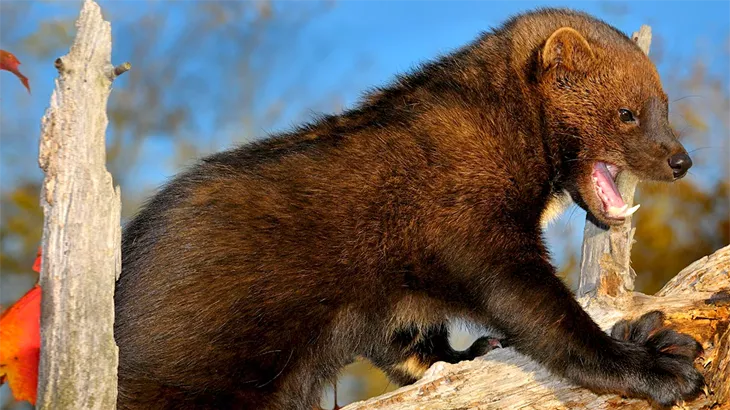
Fisher in October
Introduction
October marks a pivotal period for Fishers (Pekania pennanti) in North America, as these elusive carnivores adjust their behaviors in preparation for the colder months. This month is significant for both naturalists and hunters, as Fishers are more active during twilight and early evening hours, often moving between den sites and hunting grounds.
Understanding Fisher activity in October is essential for planning field observations, trapping, or legal hunting. Their nocturnal and crepuscular habits, combined with seasonal shifts in diet and habitat use, make this a key month for studying population dynamics and ecosystem interactions.
Hunters, wildlife enthusiasts, and conservationists can gain valuable insights into Fishers’ ecological role and seasonal behaviors, aiding both sustainable management and ethical hunting practices.
Behavior and Biology
Appearance
Fishers are medium-sized mustelids, with a slender body covered in thick, dark brown fur, and bushy tails. Adult males typically weigh between 8–13 lbs (3.5–6 kg), while females range from 5–10 lbs (2.3–4.5 kg). They possess sharp retractable claws and elongated bodies adapted for climbing trees and pursuing prey in dense forests.
Behavior
In October, Fishers exhibit heightened hunting activity to accumulate energy reserves for winter. Their diet consists mainly of small mammals, birds, insects, and carrion. Fishers are solitary creatures, maintaining territorial ranges marked with scent posts and vocalizations. October sees increased movement as they explore for abundant food sources before colder weather sets in.
Habitat
Fishers prefer dense coniferous and mixed forests with mature trees that provide cover and denning sites. Across North America, they are found from the northeastern United States through the Great Lakes region, extending into Canada and parts of the Pacific Northwest. In October, seasonal movements may include shifts to lower elevations or areas with higher prey availability.
Hunting and Seasonality
Hunting Practices
Legal hunting of Fishers is regulated by state and provincial guidelines. Typical methods include trapping and the use of baited stations. Ethical considerations emphasize minimizing stress and avoiding overharvesting. Hunters should also be familiar with local restrictions on seasons, bag limits, and gear requirements to comply with wildlife management laws.
Seasonal Activity
During October, Fishers increase nocturnal and crepuscular movements in response to food availability. This period precedes their winter slowdown, making them more observable at dusk and dawn. Breeding does not occur until late winter, so October is primarily focused on foraging and territory maintenance.
Ecological Role
Fishers play a critical role as mesopredators in North American forests. They help control populations of small mammals such as squirrels and porcupines, influencing forest regeneration and seed dispersal indirectly. In October, their predation patterns can affect prey behavior and distribution, contributing to a balanced ecosystem.
Regional Differences
Activity patterns of Fishers can vary depending on the region. In the northern U.S. and Canada, October sees more movement due to preparation for snow cover, while in the Pacific Northwest, milder temperatures allow for extended foraging. Local forest composition also affects prey availability and denning behavior.
Practical Tips
- For hunters and trappers: focus on dusk and dawn when Fishers are most active.
- For naturalists: use trail cameras or quietly observe near known den sites to study behavior without disturbance.
- For all: ensure adherence to state or provincial regulations, and practice ethical wildlife observation.
- October is optimal for studying feeding habits, as Fishers’ diet diversity peaks in preparation for winter.
Quick Reference Table
| Aspect | Details |
|---|---|
| Scientific Name | Pekania pennanti |
| Month | October |
| Behavior | Increased foraging, territorial movement, nocturnal/crepuscular activity |
| Hunting Activity | Trapping, baited stations, observation |
| Hunting Season | State/province-specific, usually fall months |
| Range | Northeastern U.S., Great Lakes, Pacific Northwest, Canada |