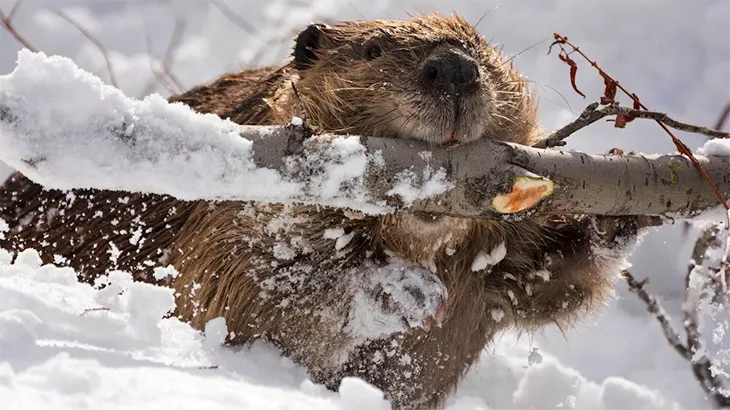
Beaver in December
Introduction
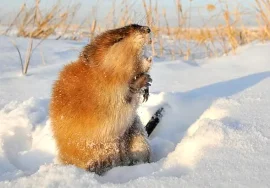
December is the height of winter preparation and endurance for the North American beaver (Castor canadensis). As cold grips most of the continent, beavers retreat fully to their underwater lodges, relying on months of preparation and stored food caches to survive. For wildlife observers, this period reveals one of nature’s most efficient survival strategies. For trappers, December remains a key month for high-quality pelts, though it demands careful navigation of frozen wetlands and compliance with strict seasonal regulations.
With their ponds sealed under ice and days shortened to their lowest light, beavers’ resilience in December is remarkable. Understanding how these industrious furbearers manage energy, maintain their family structures, and influence ecosystems through the coldest season offers valuable insight for hunters, naturalists, and conservation-minded outdoorsmen alike.
Behavior and Biology in December
Winter Survival and Lodge Life
By December, beavers are fully adapted to life beneath the ice. Their lodges, built from mud and sticks, are airtight and insulated, maintaining above-freezing temperatures even when air temperatures plummet below zero. Inside, families of up to eight individuals: a breeding pair, this year’s kits, and last year’s yearlings; huddle together for warmth. The lodge’s interior remains dry and stable, with access tunnels leading directly to open water below the ice.
Feeding Behavior and Metabolism
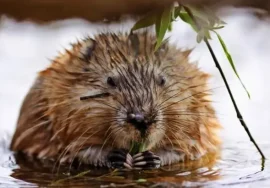
Food caching, which peaked in early autumn, pays off now. Beavers feed primarily on the submerged branches of willow, aspen, birch, and poplar stored near their lodges. They strip bark and consume the inner cambium, a carbohydrate-rich layer that sustains them through the lean winter months. Metabolism slows, reducing the need for frequent feeding or long-distance travel. Energy efficiency is crucial, each underwater trip is carefully calculated to minimize exposure to freezing water.
Communication and Activity Levels
Surface activity is virtually nonexistent except in the southernmost regions of the beaver’s range. Under the ice, however, movement continues, beavers maintain underwater channels, clear access to caches, and occasionally patch small leaks in the lodge. Communication within the family remains active through vocalizations, body contact, and scent marking inside the lodge. Tail slaps, though less common in winter, still serve as alarms when danger approaches from predators or human intrusion.
Hunting and Trapping Activity in December
Peak Fur Season
December represents one of the best months for trappers targeting beaver pelts. The fur is at its thickest and most luxurious, adapted for thermal protection against ice-cold water. Most northern states and Canadian provinces maintain open beaver seasons through December, though specific dates and methods vary by jurisdiction. Hunters should always review state regulations regarding trapping techniques, tagging, and reporting requirements to ensure compliance.
Methods and Equipment
In frozen conditions, under-ice trapping becomes the most effective approach. Body-grip traps are typically set along active runs or near food caches identified by air bubbles under the ice. Modern trappers rely on chisels, ice saws, and safety lines to access underwater entry points safely. Snowshoes or skis are often essential for reaching remote ponds in deep snow conditions. Patience, careful observation of sign, and experience with ice safety are vital to success and personal protection.
Ethical and Environmental Considerations
Ethical trapping during December emphasizes minimal disturbance to non-target species and the habitat itself. Overharvesting can disrupt wetland systems, leading to reduced biodiversity and water retention. Trappers should leave enough breeding pairs to maintain the ecological balance of the area. When possible, avoid unnecessary damage to lodges or dams, these structures benefit countless other species throughout the year, including waterfowl, amphibians, and fish.
Ecological Role in December
Even under thick layers of ice, beavers continue to shape their environments in profound ways. Their dams maintain stable water levels that support aquatic life through the winter months. Frozen beaver ponds act as natural reservoirs, slowly releasing water into streams and wetlands, preventing desiccation and ensuring survival for fish and invertebrates. In turn, this activity stabilizes local ecosystems and provides critical habitats for overwintering wildlife such as muskrats, mink, and otters.
Predators such as coyotes and wolves may patrol frozen ponds, searching for vulnerabilities in lodge walls or weak ice near air holes. However, beavers’ strong construction and underwater access points typically provide excellent protection. Their absence above the surface belies the vital ecological role they continue to play below it – sustaining entire wetland systems even when the landscape appears lifeless.
Regional Differences Across North America
Regional climate variations greatly affect beaver behavior in December. In the far north (Alaska, northern Minnesota, and much of Canada) lodges are sealed beneath deep snow and ice, and activity is entirely sub-ice. The water remains the beavers’ lifeline, with nearly all movement restricted to submerged routes. In the Pacific Northwest and parts of the southern Appalachians, milder conditions may still permit limited surface repairs and short foraging trips.
In southern regions such as Louisiana, Georgia, and Texas, ice rarely forms, and beavers remain comparatively active year-round. They may continue minor dam work and foraging, especially after heavy rains that alter water levels. These differences highlight the species’ adaptability across a vast geographic and climatic range, a hallmark of the beaver’s success across North America.
Practical Tips for Hunters and Naturalists
- Check local regulations: December trapping rules vary widely by state and region, always confirm before setting lines.
- Be ice-safe: Use safety lines, always check ice thickness, and avoid flowing water areas where ice may be thin.
- Scout from shore: Look for frost-free vents or rising air bubbles – signs of an active colony beneath the ice.
- Optimize for fur quality: Late-season pelts are at their densest, ideal for trappers seeking premium results.
- Observe ethically: For naturalists, December is a time to study beaver influence indirectly through ice formations, lodge placement, and ecosystem resilience.
Quick Reference Table
| Aspect | Details |
|---|---|
| Species | Beaver |
| Scientific Name | Castor canadensis |
| Month | December |
| Behavior | Under-ice living, feeding from food caches, minimal surface activity |
| Hunting Activity | Active trapping season; best fur quality; requires under-ice techniques |
| Typical Habitat | Wetlands, rivers, ponds, and riparian forests |
| Primary Regions | Across North America; most active in northern wetlands and forests |
| Seasonal Notes | Complete winter adaptation; energy conservation; strong family bonds in lodges |