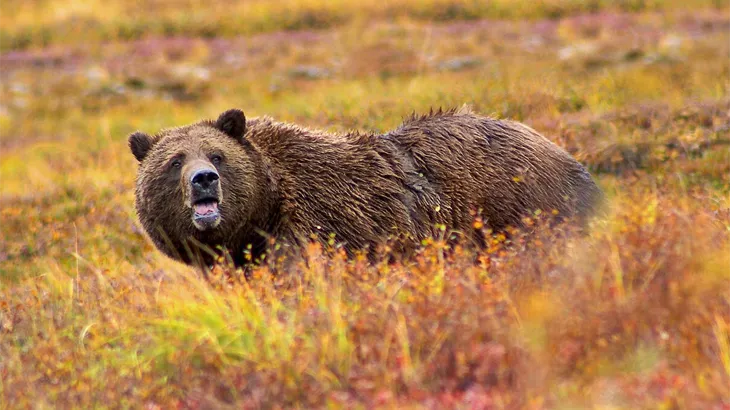
Grizzly Bear in November
Introduction
November is a critical month for Grizzly Bears (Ursus arctos horribilis) as they prepare for the long winter hibernation. During this period, bears increase their foraging activity to build fat reserves, making it one of the most important months for their survival. Understanding Grizzly Bear behavior in November is crucial for hunters, wildlife enthusiasts, and naturalists who wish to observe or safely interact with this iconic North American predator.
In North America, Grizzly Bears are primarily found in Alaska, western Canada, and parts of the northwestern United States. November represents a transitional phase in their annual cycle, as food sources dwindle and temperatures drop. Awareness of their behavior, movement patterns, and habitat preferences during this month enhances both ecological knowledge and safe hunting practices.
Behavior and Biology
Feeding and Foraging
In November, Grizzly Bears intensify their feeding activity to accumulate sufficient fat for hibernation. They forage for late-season berries, roots, and carrion, and may opportunistically hunt ungulates such as deer or moose calves. Feeding patterns are often concentrated in lowland valleys and river corridors where food remains available.
Movement and Migration
Bears begin moving toward their winter dens during November. Adult males and solitary females tend to select remote dens earlier, while younger bears may delay. This movement reduces encounters with humans and other bears, but also concentrates activity along traditional travel routes.
Reproduction and Den Preparation
Although mating typically occurs earlier in the year, November is a time when females prepare dens for their cubs. Den sites are usually dug into hillsides or sheltered areas, insulated with vegetation and snow. Males do not hibernate as deeply and may remain active longer, foraging opportunistically.
Hunting and Seasonality
Hunting Practices
Grizzly Bear hunting in November is strictly regulated in most U.S. states and Canadian provinces. Legal methods often include baiting and spot-and-stalk techniques. Hunters must comply with local seasons, quotas, and licensing requirements. Ethical hunting emphasizes safety, respect for wildlife, and minimal environmental impact.
Seasonal Activity
November marks the peak of pre-hibernation activity. Bears are more predictable in their foraging locations, which can aid hunters and wildlife observers. However, reduced daylight and colder temperatures require careful planning and proper gear, including layered clothing, GPS devices, and bear safety equipment.
Ecological Role
Grizzly Bears play a key role in North American ecosystems. In November, their foraging helps control ungulate populations and disperse seeds through fecal matter. They also provide carrion for scavengers, supporting the broader food web. Their movement between habitats contributes to nutrient cycling across forests and river systems.
Regional Differences
Activity patterns in November vary by region. In Alaska and northern Canada, food sources remain abundant longer, allowing extended foraging before hibernation. In the lower 48 states, such as Montana, Wyoming, and Idaho, bears may enter dens earlier due to harsher climates and reduced food availability. Hunters and observers must account for these regional differences when planning trips.
Practical Tips
- Always check local hunting regulations before planning a hunt or observation trip.
- Use proper camouflage and maintain a safe distance when tracking bears.
- Carry bear spray and know emergency procedures for encounters.
- Consider using trail cameras to monitor movement patterns without disturbing the bears.
- Respect natural habitats and avoid disrupting denning sites.
Quick Reference Table
| Aspect | Details |
|---|---|
| Species Name | Grizzly Bear (Ursus arctos horribilis) |
| Month | November |
| Behavior | Foraging intensifies, movement toward dens, preparation for hibernation |
| Hunting Activity | Limited legal hunting, regulated by seasons and permits |
| Hunting Season | Varies by state/province, generally early fall to November |
| Regions | Alaska, Western Canada, Northwestern U.S. (Montana, Wyoming, Idaho) |
| Conservation Status | Stable to Vulnerable depending on region |