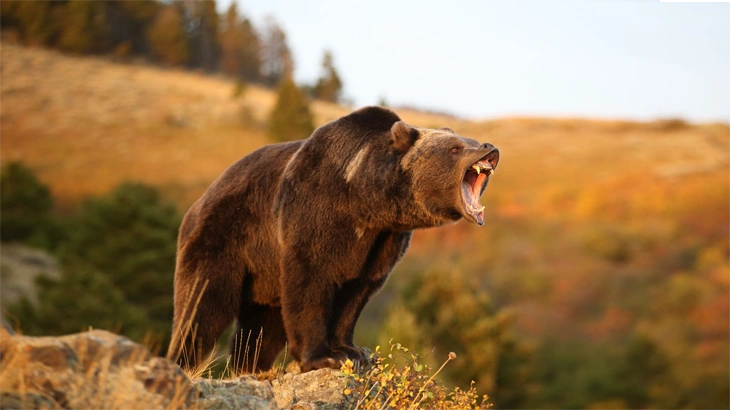
Grizzly Bear in August
Introduction
August is a critical month for Grizzly Bears (Ursus arctos horribilis) across North America. As summer transitions toward fall, bears intensify their feeding habits in preparation for hibernation. This period is particularly significant for wildlife enthusiasts, hunters, and conservationists, as bears become more visible and actively forage over larger territories.
During August, Grizzly Bears focus on maximizing calorie intake, making this month essential for their health, reproduction, and survival through the harsh winter months. Observing their behavior now provides unique insights into their biology and ecosystem interactions.
Behavior and Biology
Feeding and Foraging
In August, Grizzly Bears exhibit hyperphagia — a period of intense feeding. They consume berries, roots, insects, small mammals, and fish where available. This high-calorie intake is crucial for accumulating fat reserves for hibernation.
Movement and Territory
Bears expand their foraging range during this month, often traveling significant distances to locate high-energy food sources. Males tend to roam more widely than females, while mothers with cubs may stick closer to protective areas.
Reproduction and Adaptation
While mating season peaks in May and June, August is still a critical period for mother bears raising cubs. Cubs learn essential survival skills, including foraging and predator avoidance. Bears also adapt their daily activity patterns to avoid human interaction, often becoming more nocturnal in areas of high human presence.
Hunting Activity
Legal Hunting Practices
Grizzly Bears are strictly regulated under federal and state laws. Legal hunting is limited to specific areas in Alaska and certain northern Rocky Mountain regions. Hunters typically use rifle hunting methods, adhering to quotas and strict safety regulations. Ethical hunting emphasizes fair chase, understanding bear behavior, and minimizing human-bear conflict.
Seasonal Activity
August falls within a period of high bear activity due to hyperphagia. Bears may be encountered near salmon streams, berry patches, or open meadows. Understanding their movement patterns during this month is crucial for both safety and effective wildlife observation.
Ecological Role
Grizzly Bears are keystone species, influencing ecosystem dynamics in multiple ways. In August, their foraging helps disperse seeds and control prey populations. Bears also affect nutrient cycling by transferring nutrients from streams to forests. Predation and scavenging activities support biodiversity, impacting smaller mammals and other species within their range.
Regional Differences
Grizzly Bear activity in August varies by region:
- Alaska: Bears are highly active near salmon streams.
- Montana and Wyoming: More foraging in high-altitude meadows and forests.
- British Columbia and Alberta: Increased movement toward berry-rich areas.
- Pacific Northwest: Rare sightings; bears remain largely in protected areas.
Practical Tips
For hunters, observers, and nature enthusiasts:
- Always maintain a safe distance and carry bear spray when in bear habitats.
- Observe feeding areas during early morning or late evening hours.
- Stay informed on regional hunting regulations and seasonal closures.
- Use binoculars and trail cameras for observation rather than direct approach.
Quick Reference Table
| Aspect | Details |
|---|---|
| Species Name | Grizzly Bear (Ursus arctos horribilis) |
| Month | August |
| Behavior | Hyperphagia, foraging, increased movement, cub rearing |
| Hunting Activity | Highly regulated; mainly Alaska and northern Rockies |
| Hunting Season | Varies by state/region; strict quotas |
| Regions | Alaska, Northern Rockies (Montana, Wyoming, Idaho), Western Canada (British Columbia, Alberta) |
| Conservation Status | Threatened in contiguous U.S., stable in Alaska |