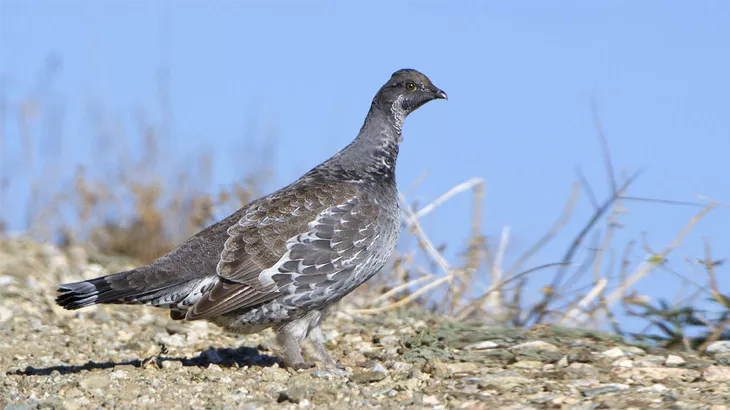
Dusky Grouse in October
Introduction
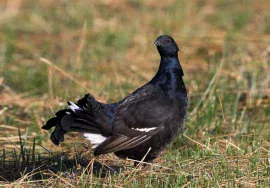
October marks a pivotal month for the Dusky Grouse across its mountainous range in North America. As autumn deepens, these upland game birds shift their feeding patterns, adjust to cooler conditions, and become more visible to hunters and naturalists. Understanding their seasonal behavior is key for ethical hunting, effective observation, and conservation efforts.
This period is also when many U.S. states open their grouse hunting seasons, making October an ideal time to study their habits and implement responsible practices. For wildlife enthusiasts, it offers unique opportunities to observe the birds’ transition from open meadows to denser coniferous cover as winter approaches.
Behavior and Biology
Feeding and Movement
In October, Dusky Grouse gradually shift from feeding in grassy openings to browsing on buds, needles, and berries in mixed and coniferous forests. Their diet adapts to dwindling insect populations, focusing instead on evergreen foliage, mountain ash berries, and other late-season forage. Movement becomes more localized as they begin to establish wintering territories higher on slopes.
Reproduction and Adaptation
By this month, the breeding season has long ended. Young of the year are fully grown and learning to navigate adult habitats. Flocks often include family groups that may disperse as the season progresses. The birds’ cryptic plumage provides excellent camouflage against fallen leaves and conifer shadows, a crucial adaptation against predators like hawks, foxes, and coyotes.
Hunting Activity
Season Timing
October coincides with prime Dusky Grouse hunting seasons in many western states, including Colorado, Montana, Wyoming, and Idaho. Hunters should verify local regulations for bag limits, season dates, and access requirements, as these can vary widely between jurisdictions.
Methods and Equipment
Flush-hunting with pointing or flushing dogs remains the most effective method. Light to medium shotguns (20 or 12 gauge) with #6 or #7.5 shot are common choices for these medium-sized birds. Hunters often hike along ridges, forest edges, and high-elevation meadows at dawn and dusk when birds are most active. Ethical practices include identifying targets carefully to avoid non-game species and respecting habitat integrity.
Seasonal Restrictions
Some areas impose early-season closures or reduced bag limits to protect local populations. Additionally, weather conditions, especially early snow at higher elevations, may restrict access and influence bird distribution.
Ecological Role
During October, Dusky Grouse serve as both prey and ecosystem engineers. Their foraging helps disperse seeds of berries and control certain insect populations earlier in the season. They also provide a food source for raptors and mammalian predators preparing for winter scarcity. Observing these interactions helps naturalists understand the dynamics of high-elevation ecosystems.
Regional Differences
Activity patterns vary across the species’ range. In the southern Rockies, birds may already move to winter cover by mid-October, while in northern areas they might still forage in mixed habitats until snow accumulation increases. Elevation and habitat type strongly influence where hunters and observers will find birds at this time of year.
Practical Tips
- For Hunters: Scout high-elevation forests before the season opens to locate food sources like berries and conifers. Use GPS or mapping apps to mark productive areas.
- For Observers: Early morning hikes on ridgelines can yield sightings of feeding flocks. Bring binoculars and wear muted clothing to blend into the environment.
- Safety: Weather can change rapidly in mountainous regions—carry appropriate gear and check forecasts.
Quick Reference Table
| Aspect | Details |
|---|---|
| Species Name | Dusky Grouse |
| Scientific Name | Dendragapus obscurus |
| Month | October |
| Behavior | Shift to coniferous habitats, feeding on needles and berries |
| Hunting Activity | Peak season in many western states; flush-hunting with dogs |
| Hunting Season | Varies by state, often open through October |
| Regions | Rocky Mountains, Pacific Northwest, high-elevation forests |