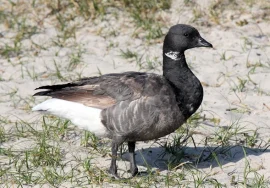

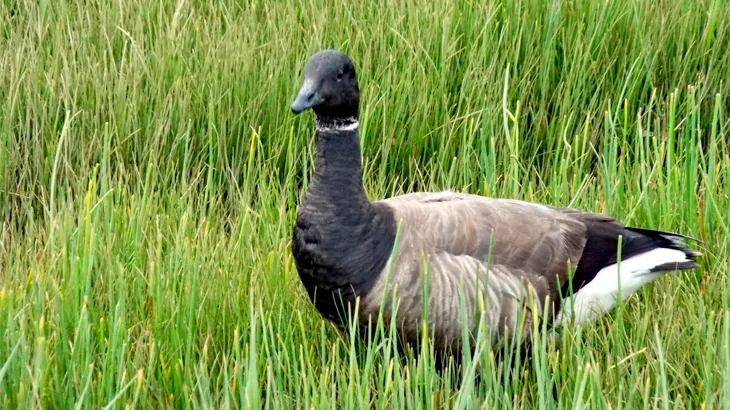
Brant in September
Introduction
September is a transitional month for the Brant (Branta bernicla), a small migratory goose that holds a unique place in North America’s coastal ecosystems. As summer draws to a close, Brant populations begin their preparation for the long southward migration. This makes September a month of energy accumulation, molting recovery, and shifting movement patterns.
For hunters, naturalists, and birdwatchers, September is a critical time to understand Brant behavior. Although hunting seasons for Brant typically open later in the fall, September scouting provides valuable insights into feeding areas, flocking behavior, and migration timing. Observing these geese now can help enthusiasts prepare for the months ahead.
Behavior and Biology
Migration Preparation
September marks the start of the Brant’s migratory cycle. After completing their summer molt in the Arctic and sub-Arctic regions, many birds begin staging in coastal areas of Canada and Alaska. They feed heavily to build fat reserves, which are essential for their long journey to wintering grounds along the Atlantic and Pacific coasts.
Feeding Habits
During this month, Brant continue their dependence on eelgrass and sea lettuce in shallow estuaries. These plants provide the energy-dense nutrition required for migration. In some regions, agricultural fields may also be used as supplemental feeding grounds when coastal vegetation is scarce.
Social Structure
Brant travel in tight family groups and flocks, displaying coordinated flight patterns that make them both spectacular to watch and challenging to hunt later in the season. September is a time when young birds become stronger flyers, learning to keep pace with adults during the migration south.
Hunting Activity
Hunting Season Timing
In most U.S. states, the Brant hunting season does not open until October or November. However, September is still highly relevant for hunters. Scouting during this month allows hunters to identify coastal staging areas, feeding flats, and flight paths that will be productive once the season opens.
Methods and Equipment
Although direct hunting is limited, September is a good time to prepare equipment. Hunters often focus on decoys and blinds designed to mimic natural coastal environments. Lightweight waders, layout blinds, and Brant-specific decoy spreads are essential tools. Ethical hunting practices remain crucial, respecting closed seasons ensures the species’ long-term stability.
Ecological Role
Brant play an important role in maintaining the health of coastal ecosystems. By grazing eelgrass beds, they help regulate vegetation growth and promote habitat diversity for fish, invertebrates, and other waterfowl. In September, their intense feeding can influence eelgrass dynamics, while also providing prey opportunities for predators such as foxes, raptors, and large gulls.
Regional Differences
Along the Pacific Coast, Brant populations begin staging in Alaska and British Columbia before moving south toward Washington, Oregon, and California. On the Atlantic Coast, birds gather in eastern Canada and the Maritime provinces before migrating toward New Jersey, New York, and Virginia. Timing can vary depending on weather, food availability, and local conditions, meaning September activity is not uniform across all regions.
Practical Tips
- For hunters: Use September to scout tidal flats, estuaries, and salt marshes where Brant are feeding. Record tide cycles and note where birds concentrate at low water.
- For birdwatchers: September is an excellent month to observe large flocks gathering before migration. Coastal hotspots provide reliable viewing opportunities.
- For naturalists: Monitoring Brant feeding pressure on eelgrass beds can help track the health of fragile coastal ecosystems.
Quick Reference Table
| Aspect | Details |
|---|---|
| Scientific Name | Branta bernicla |
| Month | September |
| Behavior | Migration staging, intensive feeding, flocking in coastal areas |
| Hunting Activity | Scouting only; most seasons not open yet |
| Hunting Season | Typically begins October–November (varies by state) |
| Regions | Coastal Alaska, British Columbia, Atlantic Canada, U.S. East and West Coasts |