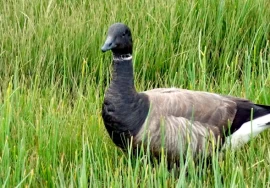

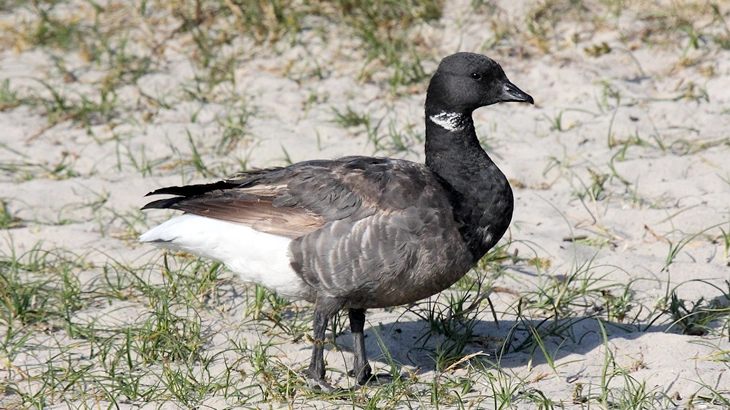
Brant in August
Introduction
August marks a transitional period for the Brant goose (Branta bernicla) in North America. While this species is not yet in full migration, many flocks are preparing for the upcoming fall movement. The month is defined by molting, feeding, and building energy reserves, making it a critical time for both survival and future reproduction.
For hunters, August is not an active harvest month for Brant, since seasons generally open later in the fall. However, understanding their late-summer behavior is essential for scouting locations, studying flight patterns, and preparing strategies for the legal hunting season. For naturalists and birdwatchers, August offers opportunities to observe Brant in their coastal habitats with minimal disturbance.
Behavior and Biology in August
Molt and Feather Renewal
By August, most Brant are finishing their molt. During this process, they lose and regrow feathers, which temporarily reduces their ability to fly. This makes them more vulnerable to predators and highly dependent on safe, resource-rich habitats.
Feeding Behavior
Brant geese rely heavily on coastal food sources during August, including eelgrass beds, sea lettuce, and other marine vegetation. Feeding intensifies as they prepare for migration, with large groups concentrating on nutrient-rich areas.
Social Structure
Family groups are common in late summer, with adult pairs leading their goslings through feeding grounds. These small flocks may gather into larger groups, offering protection and increasing foraging efficiency.
Hunting Activity
Seasonal Timing
In August, hunting Brant is generally not permitted in North America. Their official hunting seasons begin in the fall, typically from October through January, depending on state regulations.
Scouting and Preparation
Although hunting is closed, August is a valuable month for scouting. Hunters often visit coastal bays, marshes, and estuaries to observe where Brant are feeding and roosting. Identifying patterns now provides a strategic advantage once the season opens.
Gear and Techniques
August is also a good time to prepare hunting gear, repair decoys, and fine-tune waterfowl calls. Since Brant hunting requires specialized strategies such as realistic decoy spreads and knowledge of tidal movements, early preparation is key to success.
Ecological Role in August
During August, Brant play a vital ecological role in coastal ecosystems. By grazing eelgrass beds and algae, they help maintain healthy aquatic vegetation. This feeding activity prevents overgrowth and promotes biodiversity. At the same time, their molting period makes them prey for foxes, gulls, and raptors, reinforcing their position in the food web.
Regional Differences
Brant distribution in August varies by region. Along the Atlantic Flyway, many Brant remain in northern breeding grounds or coastal staging areas in Canada. On the Pacific Flyway, Brant may be found along Alaska’s coastline and scattered northern wetlands. Southern U.S. hunters rarely see Brant in August, as migration has not yet reached those areas.
Practical Tips
- For hunters: Use August to scout coastal areas and secure access points for fall hunting.
- For birdwatchers: August is an excellent month to observe Brant feeding behaviors in estuaries without the pressure of hunting activity.
- For naturalists: Document molting and feeding concentrations to support conservation research and habitat management.
Quick Reference Table
| Aspect | Details |
|---|---|
| Species | Brant Goose (Branta bernicla) |
| Month | August |
| Behavior | Molting, feeding heavily on eelgrass and marine vegetation, forming family groups |
| Hunting Activity | No legal hunting; scouting and preparation period |
| Hunting Season | Fall–Winter (varies by state, generally October–January) |
| Regions | Northern coasts of Atlantic and Pacific Flyways; breeding grounds in Arctic and sub-Arctic regions |