

Introduction
The wild turkey (Meleagris gallopavo) is one of North America’s most iconic upland game birds. Revered by Indigenous peoples, celebrated in American culture, and sought after by hunters, it holds a unique place in the continent’s history and ecology. Once nearly driven to extinction due to overhunting and habitat loss, the wild turkey has made one of the greatest conservation comebacks in North America, with thriving populations across the United States and parts of Canada and Mexico.
For hunters, the wild turkey presents a challenging and rewarding pursuit, combining skill, patience, and knowledge of seasonal behavior. Naturalists admire its striking appearance, fascinating social dynamics, and critical ecological role, while wildlife enthusiasts appreciate observing its elaborate mating displays and flock behavior in forests and fields. Today, the wild turkey is not only a game species but also a symbol of resilience and successful wildlife management.
Identification and Characteristics
Appearance
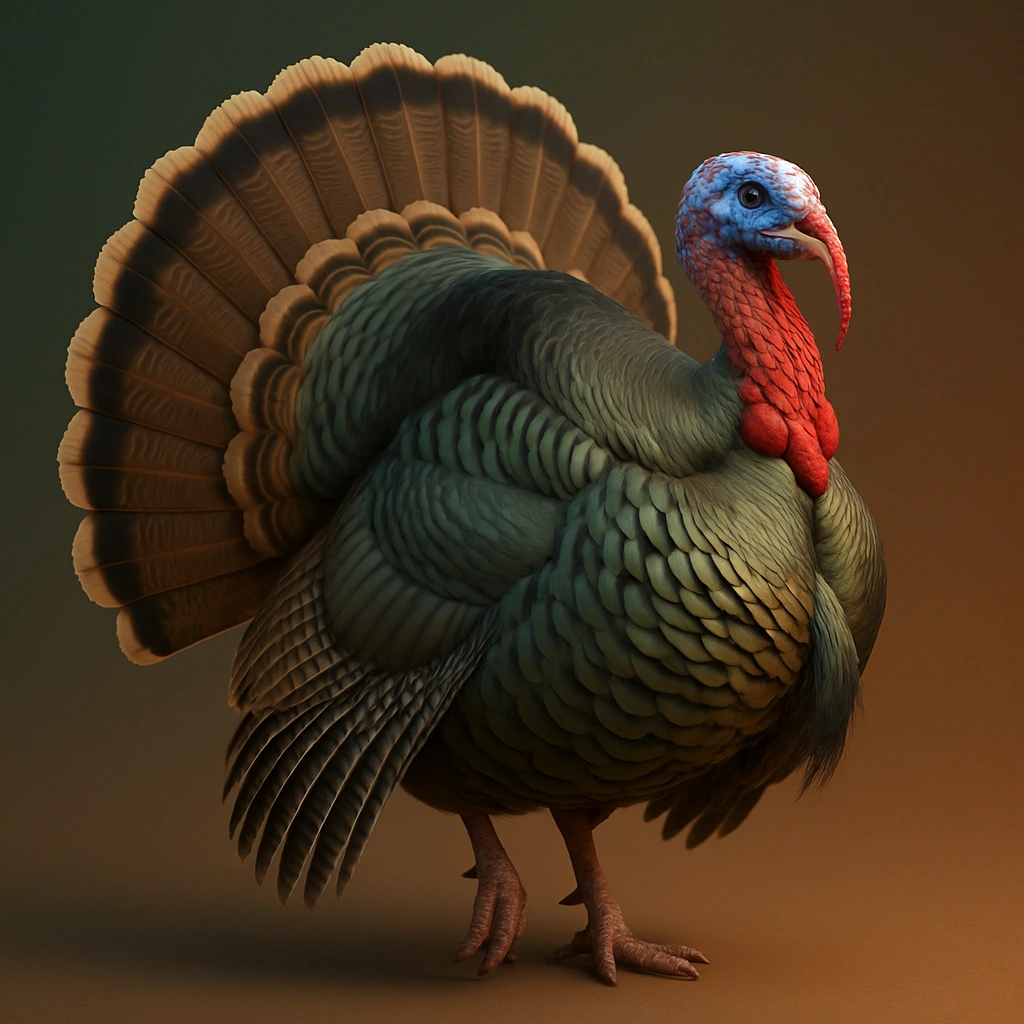
Wild turkeys are large, ground-dwelling birds with males (toms) typically weighing between 16–24 pounds (7–11 kg) and females (hens) averaging 8–12 pounds (3.5–5.5 kg). Their plumage is iridescent, with bronze, copper, and green highlights that shimmer in the sunlight. Toms are distinguished by their featherless red and blue heads, fleshy wattles, and a beard-like cluster of coarse feathers protruding from the chest. Their fan-shaped tails and long legs further set them apart. Hens are generally smaller, with duller coloration for camouflage. Juvenile males, called jakes, can be identified by shorter tail feathers and smaller beards.
Behavior
Wild turkeys are highly social, forming flocks outside the breeding season. They are omnivorous, feeding on acorns, seeds, berries, insects, and small reptiles. Their foraging often influences forest regeneration by dispersing seeds. Turkeys rely on keen eyesight and hearing to detect predators, including coyotes, bobcats, and raptors. During the spring breeding season, males engage in elaborate displays, strutting and gobbling to attract hens. Roosting in trees at night provides them with safety from ground predators.
Habitat
Wild turkeys thrive in a variety of habitats, including hardwood forests, mixed woodlands, grasslands, and agricultural fields. They prefer areas that offer both cover and open spaces for foraging. Their range spans most of the United States, southern Canada, and northern Mexico, with regional subspecies adapted to different climates. Seasonal movements are generally local, with turkeys shifting between roosting areas, feeding grounds, and breeding territories.
Hunting and Seasonality
Hunting Practices
Turkey hunting is a popular spring and fall tradition in North America. Legal methods typically include the use of shotguns and bows, with hunters employing calls and decoys to lure birds into range. Ethical hunting practices emphasize fair chase, respect for bag limits, and ensuring quick, humane harvests. Scouting for roosting sites and understanding daily movement patterns are critical strategies. Many hunters find calling and outsmarting a wary gobbler one of the most exciting challenges in all of upland hunting.
Seasonal Activity
In spring, toms are highly vocal and responsive to calls during the mating season, making this the prime hunting period. Fall hunting often focuses on locating flocks and using strategies like scattering and calling birds back. Throughout the year, wild turkeys adapt their feeding and roosting habits to seasonal availability of food sources, from acorns in autumn to insects in summer. Winter flocks often gather in agricultural areas or near woodlots with reliable food.
Ecological Role
Wild turkeys play an important role in North American ecosystems. By consuming a wide variety of plants, seeds, and insects, they contribute to seed dispersal and pest control. Their foraging can influence the regeneration of oak and hickory forests, as acorns are a dietary staple. As prey, turkeys support predators such as coyotes, foxes, and raptors, maintaining balance within food webs. Their presence indicates healthy woodland and field ecosystems.
Conservation and Management
Once nearly extirpated from much of their range in the 19th and early 20th centuries, wild turkeys have been successfully restored through reintroduction programs, regulated hunting, and habitat management. Today, populations are considered stable across most regions, though localized declines occur due to habitat fragmentation, disease, and severe winters. Wildlife agencies continue to monitor turkey numbers, regulate hunting seasons, and promote conservation practices to ensure long-term sustainability of this treasured species.
Monthly Guides
For a deeper understanding of wild turkey behavior and hunting opportunities, explore our monthly guides. These resources provide insights into flock dynamics, feeding habits, and hunting strategies tailored to each month of the year.
Quick Reference Table
| Aspect | Details |
|---|---|
| Scientific Name | Meleagris gallopavo |
| Category | Upland Game Birds |
| Typical Weight | Hens: 8–12 lbs (3.5–5.5 kg); Toms: 16–24 lbs (7–11 kg) |
| Habitat | Forests, grasslands, agricultural fields, and mixed woodlands |
| Range | Most of the United States, southern Canada, northern Mexico |
| Season | Spring and Fall hunting seasons |
| Conservation Status | Stable (with localized declines) |
Wild Turkey Hunting Information
For a full archive of hunting posts by month, visit the
Wild Turkey Category.