

Introduction
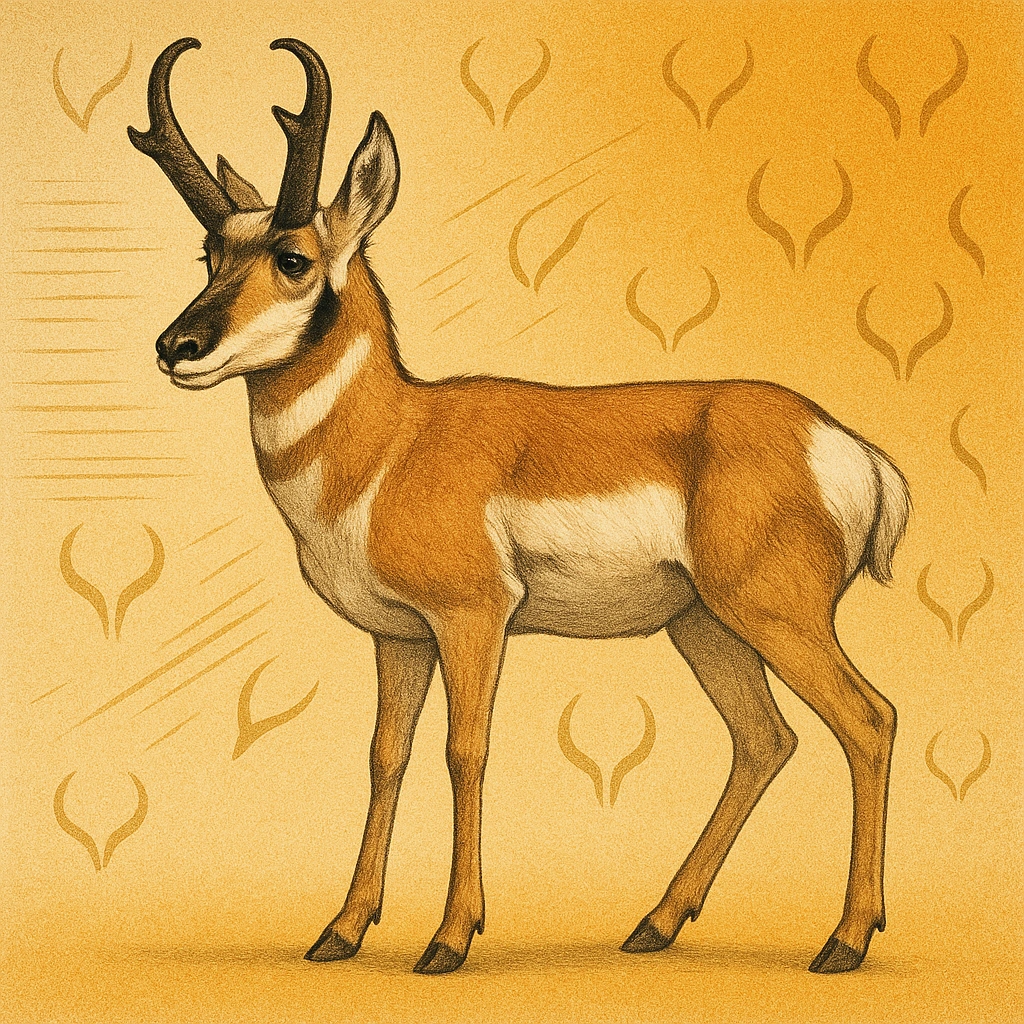
The pronghorn antelope (Antilocapra americana) is one of North America’s most iconic big-game species. Known for its incredible speed and keen eyesight, the pronghorn has fascinated hunters, wildlife photographers, and naturalists alike. This uniquely American ungulate is often called an antelope, but it is not a true antelope — its lineage is distinct and found nowhere else in the world.
Pronghorns inhabit some of the continent’s most open and rugged habitats, making them a challenging yet rewarding pursuit for sportsmen and an essential study species for ecologists. Their role in maintaining prairie ecosystems, combined with their impressive adaptations, makes them a symbol of the Western plains and high-desert grasslands.
For hunters, the pronghorn represents both a test of skill and a connection to America’s wildest landscapes. For wildlife enthusiasts, the species is a living testament to adaptation and survival in harsh conditions.
Identification and Characteristics
Appearance
Pronghorns are medium-sized ungulates weighing between 90 and 150 pounds (40–68 kg), with males (bucks) typically larger than females (does). They stand about 3 feet (0.9 m) at the shoulder. Their coat is tan to reddish-brown with distinct white markings on the underbelly, rump, and throat. Bucks have black cheek patches and distinctive black horns that curve slightly backward and feature a small forward-facing prong — hence the name. Unlike deer, pronghorns shed their horn sheaths annually but retain the bony core.
Behavior
Pronghorns are diurnal and rely heavily on their vision to detect predators across vast open spaces. They form loose herds that shift seasonally, with larger mixed groups in winter and smaller breeding groups in summer. They are herbivores, feeding mainly on forbs, shrubs, and grasses, and they have a highly efficient digestive system to extract nutrients from dry forage.
The species is renowned for speed, capable of running up to 55 mph (88 km/h), and for endurance over long distances, which evolved as an escape from now-extinct North American predators. Today, coyotes, bobcats, and golden eagles are the main natural threats, especially to fawns.
Habitat
Pronghorns favor open grasslands, sagebrush flats, and desert prairies across the western and central United States, as well as parts of southern Canada and northern Mexico. They rarely enter heavily forested areas. Seasonal movements occur in some populations, with migrations between summer and winter ranges when snow or forage conditions dictate.
Hunting and Seasonality
Hunting Practices
Pronghorn hunting is a celebrated tradition in states like Wyoming, Montana, Colorado, and New Mexico. Methods include spot-and-stalk hunting across open terrain, ambush near waterholes, or decoy tactics during the rut. Archery seasons often open earlier than firearm seasons, giving bowhunters a unique challenge.
Ethical hunting of pronghorns includes adherence to state-issued tags and quotas, careful shot placement to ensure a quick, humane kill, and respect for private and public lands. Scouting and understanding wind direction and terrain are crucial, as the species’ sharp eyesight can detect movement from great distances.
Seasonal Activity
In spring and summer, pronghorns focus on feeding and raising young. By late summer and early fall, bucks establish territories and compete for does during the rut, which peaks in September. Hunting seasons are typically set to coincide with or follow this period.
Winter sees pronghorns forming larger groups and sometimes migrating to lower elevations or south-facing slopes with less snow. Understanding these seasonal shifts can dramatically improve a hunter’s chances of success.
Ecological Role
Pronghorns are vital to prairie and sagebrush ecosystems. As browsers and grazers, they influence plant communities by dispersing seeds and controlling vegetation growth. They also serve as prey for native carnivores, maintaining predator-prey dynamics. Their migratory habits help sustain open-land biodiversity and highlight the need for large, connected habitats.
Conservation and Management
Once nearly extirpated due to unregulated hunting and habitat loss, pronghorn populations have rebounded thanks to effective wildlife management, conservation funding, and partnerships between state agencies and landowners. Today, populations are stable or increasing in most areas, with over a million individuals estimated in North America.
Conservation efforts now focus on maintaining migratory corridors, minimizing fencing obstacles, and ensuring sustainable hunting quotas. Habitat restoration projects also benefit other species that share the pronghorn’s range.
Monthly Guides
Explore our month-by-month guides to understand how pronghorn behavior and hunting opportunities change throughout the year. From early-season archery tactics to late-season firearm strategies, these resources help hunters and naturalists plan their activities with precision.
Quick Reference Table
| Aspect | Details |
|---|---|
| Scientific Name | Antilocapra americana |
| Category | Big Game |
| Typical Weight | 90–150 lbs (40–68 kg) |
| Habitat | Open grasslands, sagebrush flats, and desert prairies |
| Range | Western & Central U.S., Southern Canada, Northern Mexico |
| Season | Early archery (August), general rifle seasons (September–October) |
| Conservation Status | Stable / Increasing |
Pronghorn Antelope Hunting Information
For a full archive of hunting posts by month, visit the Pronghorn Antelope Category.