
Introduction
The mountain goat (Oreamnos americanus) is one of North America’s most iconic alpine mammals, renowned for its strength, agility, and ability to thrive in some of the continent’s most extreme environments. Found high above the tree line in rugged mountain ranges, this sure-footed ungulate has become a symbol of wilderness, endurance, and isolation. Despite its name, the mountain goat is not a true goat but belongs to a distinct genus closely related to antelope-like species.
For hunters, naturalists, and wildlife enthusiasts, the mountain goat represents both a biological marvel and a profound challenge. Its remote habitat, keen senses, and steep terrain demand respect, preparation, and ethical consideration. Observing or pursuing a mountain goat often requires deep knowledge of alpine ecosystems and a commitment to conservation-minded practices.
Beyond hunting interest, mountain goats play an important role in North American mountain ecosystems. Their presence reflects ecosystem health in alpine and subalpine zones, making them a species of special interest for wildlife managers and conservationists across the western United States and Canada.
Identification and Characteristics
Appearance
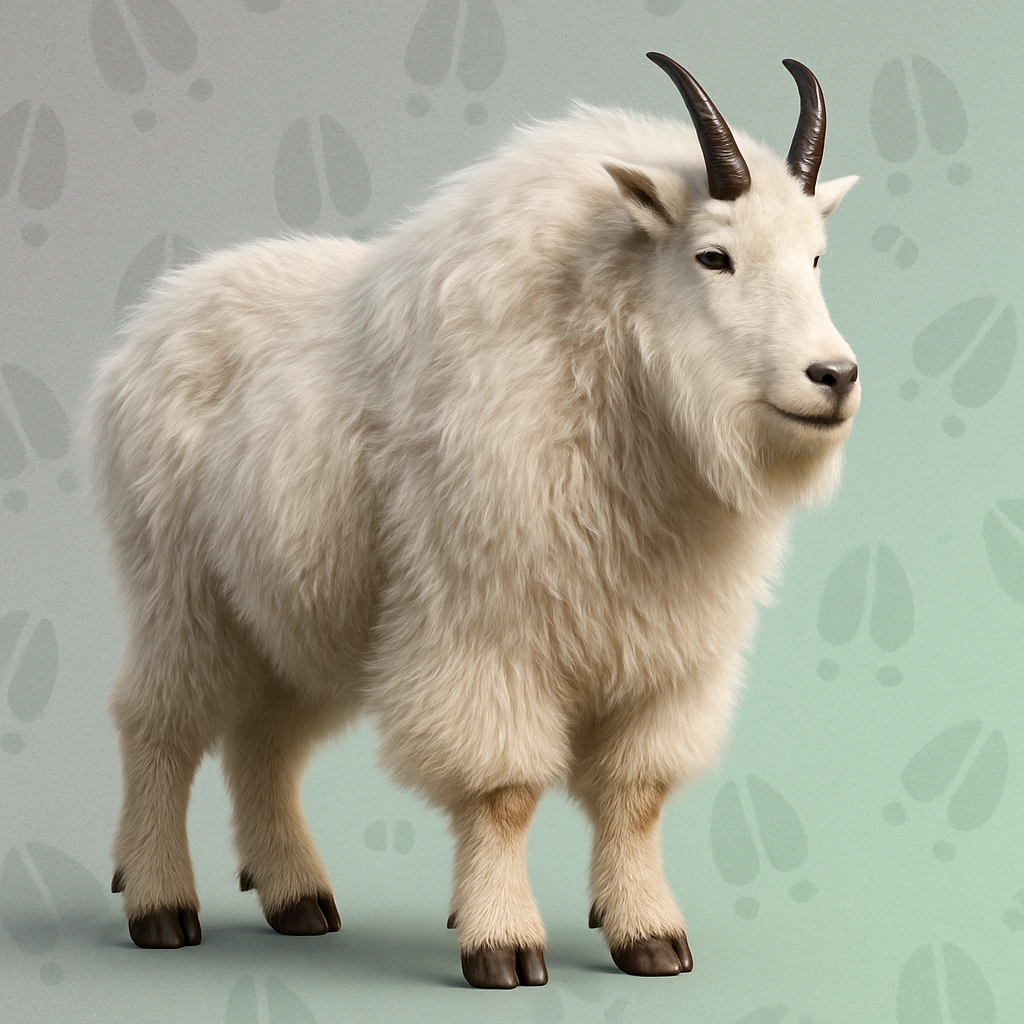
Mountain goats are large, stocky ungulates adapted for cold, high-altitude environments. Adult males (billies) typically weigh between 240 and 310 pounds (110–140 kg), while females (nannies) are smaller, averaging 130 to 220 pounds (60–100 kg). They stand about 3.5 to 4 feet tall at the shoulder.
The most distinctive feature of the mountain goat is its long, shaggy white coat, which provides insulation against harsh alpine winters. Beneath this outer coat lies a dense, woolly underlayer that sheds seasonally. Both males and females possess sharp, black, slightly curved horns that can reach 10–12 inches in length. These horns are permanent and are used for defense and dominance rather than shedding annually like antlers.
Behavior
Mountain goats are primarily diurnal, spending much of their day feeding and resting on steep cliffs and rocky outcrops. They are excellent climbers, using specialized hooves with rubbery pads that provide exceptional grip on rock faces and icy terrain.
Social structure varies by season. Females and juveniles often form small groups, while adult males are more solitary outside the breeding season. Predators include wolves, cougars, bears, and golden eagles (primarily targeting young goats). When threatened, mountain goats rely on vertical escape rather than speed, retreating to near-vertical terrain inaccessible to most predators.
Habitat
Mountain goats inhabit alpine and subalpine regions characterized by steep cliffs, rocky slopes, and sparse vegetation. In the United States, they are primarily found in the Rocky Mountains, Cascade Range, and portions of the Northern Rockies.
Seasonal movements are mostly vertical rather than migratory. During summer, goats occupy high alpine meadows and ridgelines. In winter, they descend slightly to windswept slopes and lower elevations where snow accumulation is reduced and forage remains accessible.
Hunting and Seasonality
Hunting Practices
Mountain goat hunting is considered one of the most physically demanding and regulated big game pursuits in North America. Seasons are typically limited-entry or lottery-based due to low population densities and slow reproductive rates.
Spot-and-stalk is the primary hunting method, requiring extensive glassing from long distances followed by careful approaches through steep, hazardous terrain. Ethical considerations are paramount, including accurate identification of sex (often preferring billies over nannies), safe shot placement, and retrieval planning to avoid dangerous recovery situations.
Because of the risks involved, many hunters use lightweight rifles, high-quality optics, trekking poles, and mountaineering gear. Safety training and physical conditioning are essential components of responsible mountain goat hunting.
Seasonal Activity
Mountain goats exhibit seasonal behavioral changes tied to weather, forage availability, and breeding cycles. The rut typically occurs in late fall (November–December), when males become more active and aggressive, increasing movement and visibility.
During summer, goats focus on feeding in alpine meadows rich in grasses, sedges, mosses, and lichens. In winter, activity levels decrease, and goats conserve energy while foraging on exposed vegetation and shrubs. They do not hibernate but are highly adapted to surviving extreme cold and limited food availability.
Ecological Role
Mountain goats play a subtle yet important role in alpine ecosystems. Their grazing helps shape plant communities by controlling the growth of grasses, sedges, and alpine forbs. Through their movement, they contribute to nutrient redistribution across rocky slopes and high-elevation soils.
As prey species, mountain goats support apex predators such as wolves and cougars, particularly in remote mountain regions. Their presence also influences habitat use by other alpine species, contributing to the overall balance of high-elevation ecosystems.
Conservation and Management
Overall, mountain goat populations in North America are considered stable in many regions, though localized declines have been observed due to habitat disturbance, climate change, and overharvest in the past. Their slow reproductive rate (typically one kid per year) makes populations vulnerable to overexploitation.
Wildlife agencies employ conservative management strategies, including limited-entry hunting permits, mandatory reporting, and population monitoring. Conservation efforts also focus on minimizing human disturbance in alpine habitats and maintaining connectivity between mountain ranges.
Related Taxonomies
- Seasons: Winter, Spring, Summer, Fall
- Regions: Alaska, Montana, Idaho, Wyoming, Washington, Colorado
- Biomes: Alpine, Subalpine Forest, Mountain Grassland
- Category: Big Game
Monthly Guides
Below you’ll find monthly guides detailing how mountain goats behave throughout the year, including seasonal habitat use, weather influences, and legal hunting opportunities by month. These guides provide practical insights for hunters, photographers, and wildlife observers alike.
Quick Reference Table
| Aspect | Details |
|---|---|
| Scientific Name | Oreamnos americanus |
| Category | Big Game |
| Typical Weight | 130–310 lbs (60–140 kg) |
| Habitat | Alpine and subalpine mountain terrain |
| Range | Rocky Mountains, Cascades, Northern Rockies, Alaska |
| Season | Fall (limited-entry hunts) |
| Conservation Status | Stable (regionally managed) |
Mountain Goat Hunting Information
For a full archive of hunting posts by month, visit the Mountain Goat Category.