

Introduction
The groundhog (Marmota monax), also known as the woodchuck, is one of the most recognizable and widespread small mammals in North America. Famous for its weather-predicting folklore every February 2nd, the groundhog plays a far more important ecological and cultural role than its Groundhog Day reputation suggests. These sturdy rodents are skilled burrowers, ecosystem engineers, and a classic small-game species for hunters seeking a challenge in the warmer months.
To naturalists and wildlife enthusiasts, the groundhog offers fascinating insights into hibernation biology and environmental adaptation. For hunters, it represents both a target for population management and an opportunity to sharpen marksmanship skills in open-country conditions. Their abundance, sharp senses, and elusive nature make the groundhog a staple of traditional summer hunting across much of the eastern and central United States.
Identification and Characteristics
Appearance
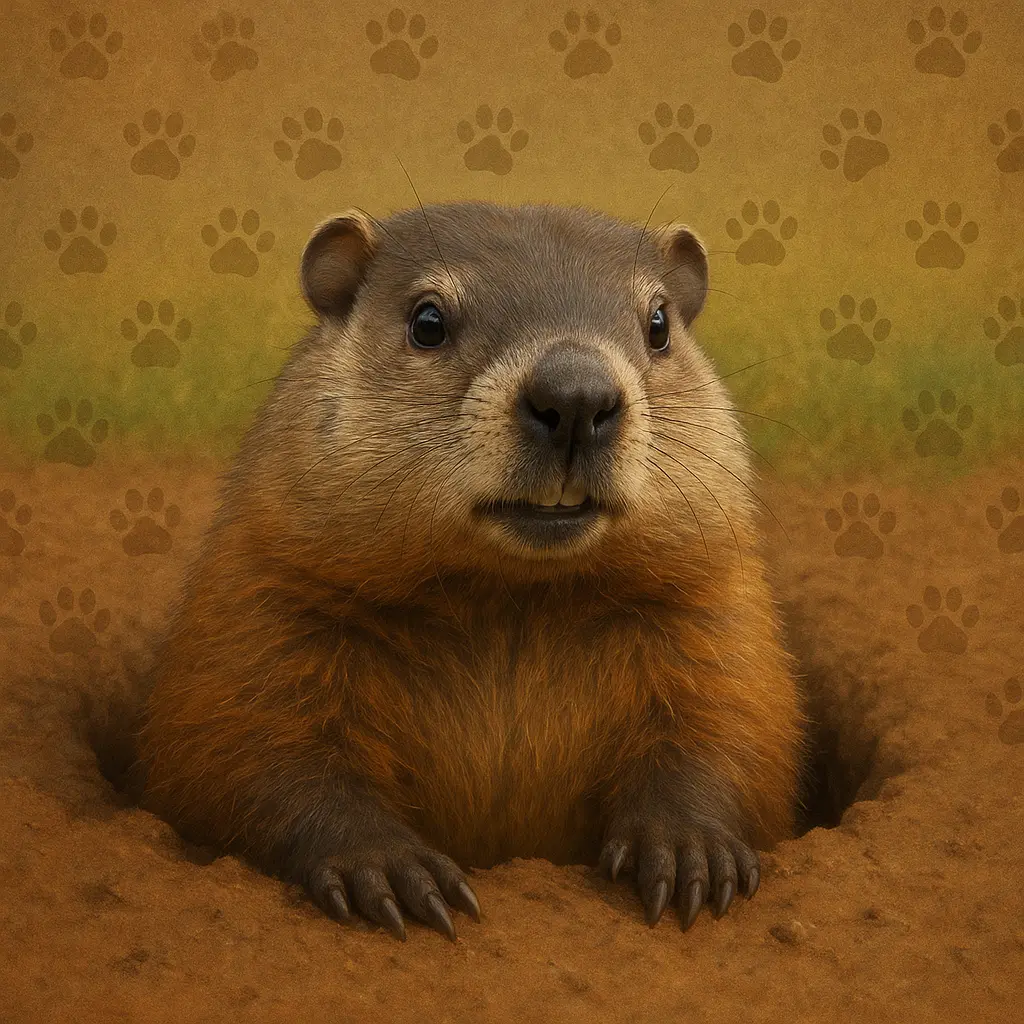
Groundhogs are the largest members of the squirrel family (Sciuridae), typically weighing between 5 and 14 pounds (2.3–6.3 kg). They have compact, muscular bodies with short, powerful legs adapted for digging. Their coarse fur ranges from brown to grizzled gray, often with reddish tones on the flanks. A short, bushy tail and strong curved claws complete their distinctive look. The head is broad and rounded, with small ears, a blunt snout, and prominent incisors designed for gnawing tough vegetation.
Behavior
Groundhogs are primarily solitary animals, occupying individual burrow systems that can extend up to 30 feet (9 meters) underground with multiple entrances. These burrows provide shelter, nesting areas, and protection from predators such as foxes, coyotes, eagles, and domestic dogs. Groundhogs are diurnal, most active during the early morning and late afternoon, feeding on grasses, clover, alfalfa, garden crops, and occasionally insects.
They are true hibernators, entering a state of deep torpor during the winter months when body temperature and heart rate drop dramatically. This adaptation allows them to survive the coldest months without feeding. Social interactions are limited to the breeding season in early spring, and territorial disputes among males can be intense during this time.
Habitat
Groundhogs thrive in open landscapes bordered by forests, such as pastures, fields, and woodland edges. They are commonly found across the eastern and central United States, extending north into Canada and south into parts of Georgia and Alabama. Their burrows are often situated on well-drained slopes with easy access to food sources. Groundhogs avoid heavily wooded or arid regions, preferring transitional zones where visibility and vegetation density allow both feeding and vigilance against predators.
Hunting and Seasonality
Hunting Practices
Groundhog hunting has long been a summertime tradition among American hunters. Seasons typically run from early spring through late summer or early fall, varying by state. Because they are not considered game animals in all jurisdictions, it’s important to check local regulations regarding bag limits and weapon types. In most regions, rifles are the preferred method, with small-caliber, high-velocity rounds (such as .22-250, .223 Remington, or .243 Winchester) being ideal for accuracy and minimal meat damage.
Spot-and-stalk hunting and long-range shooting from blinds are the most common techniques. Hunters often glass open fields and pastures in the morning, waiting for groundhogs to emerge from their burrows to feed. Patience, precision, and wind awareness are key. Many hunters also use bipods or shooting benches for stability, as shots can range from 50 to 400 yards. Ethical hunting practices emphasize ensuring quick, clean kills and respecting property boundaries, since many hunts take place on agricultural land.
Seasonal Activity
Groundhogs emerge from hibernation between February and March, depending on latitude, and remain active until late September or early October. Breeding occurs soon after emergence, with one litter born per year—typically in April or May. During the summer months, groundhogs spend much of their time feeding and maintaining their burrows, preparing for the next hibernation cycle. As autumn approaches, their activity diminishes as temperatures drop and daylight shortens.
For hunters, midsummer offers the best opportunity, when vegetation is lush, and groundhogs are visible feeding in open fields. By late summer, older individuals become wary due to repeated encounters with humans, requiring more skill and stealth to approach within range.
Ecological Role
Groundhogs play a crucial ecological role in maintaining soil health and supporting biodiversity. Their burrowing activity aerates the soil, enhances water infiltration, and creates habitat opportunities for other species, including rabbits, foxes, skunks, and reptiles. Abandoned burrows often become vital shelters for these secondary occupants.
As herbivores, groundhogs help regulate vegetation growth and influence plant community composition. They also serve as prey for numerous predators, forming an important link in the food web. In agricultural areas, they can become pests due to crop damage or burrow interference with machinery, underscoring the balance between population control and conservation.
Conservation and Management
The groundhog population across North America is stable and in many areas increasing, thanks to abundant food sources and adaptable behavior. They are classified as “Least Concern” by conservation authorities. However, localized declines may occur in regions with extensive urbanization or heavy predator presence.
Wildlife management efforts focus primarily on education and responsible population control rather than conservation urgency. Many states promote groundhog hunting as a tool for agricultural pest management, offering extended or year-round seasons. Conservationists encourage coexistence through habitat planning and by maintaining buffer zones around farmland to minimize human-wildlife conflict.
Monthly Guides
Below you’ll find monthly guides that explore how the groundhog’s behavior, diet, and hunting opportunities change throughout the year. Each post provides insights into seasonal adaptations, field strategies, and the ecological dynamics that define this remarkable North American mammal.
Quick Reference Table
| Aspect | Details |
|---|---|
| Scientific Name | Marmota monax |
| Category | Small Game & Furbearers |
| Typical Weight | 5–14 lbs (2.3–6.3 kg) |
| Habitat | Open fields, forest edges, farmlands, grasslands |
| Range | Eastern and Central U.S., parts of Canada |
| Season | Spring–Early Fall (varies by state) |
| Conservation Status | Stable (Least Concern) |
Groundhog (Woodchuck) Hunting Information
For a full archive of hunting posts by month, visit the Groundhog (Woodchuck) Category.