

Introduction
The elk (Cervus canadensis), also known as the wapiti, is one of North America’s most iconic big game species. Revered for its size, strength, and impressive antlers, the elk has long held cultural, ecological, and economic importance across the continent. Once ranging widely from coast to coast, elk populations today remain concentrated in the Rocky Mountains, the Pacific Northwest, parts of the Midwest, and select reintroduction zones in the East. Their presence symbolizes both wilderness and successful wildlife management in North America.
For hunters, elk represent one of the ultimate challenges in big game hunting, requiring skill, patience, and knowledge of terrain and seasonal behavior. For naturalists and wildlife enthusiasts, elk are a marvel of adaptation and a key species to observe, especially during the dramatic autumn rut when bulls bugle across valleys to establish dominance. Their role in shaping landscapes, supporting predator populations, and enriching ecosystems underscores why elk continue to fascinate scientists and conservationists alike.
Identification and Characteristics
Appearance
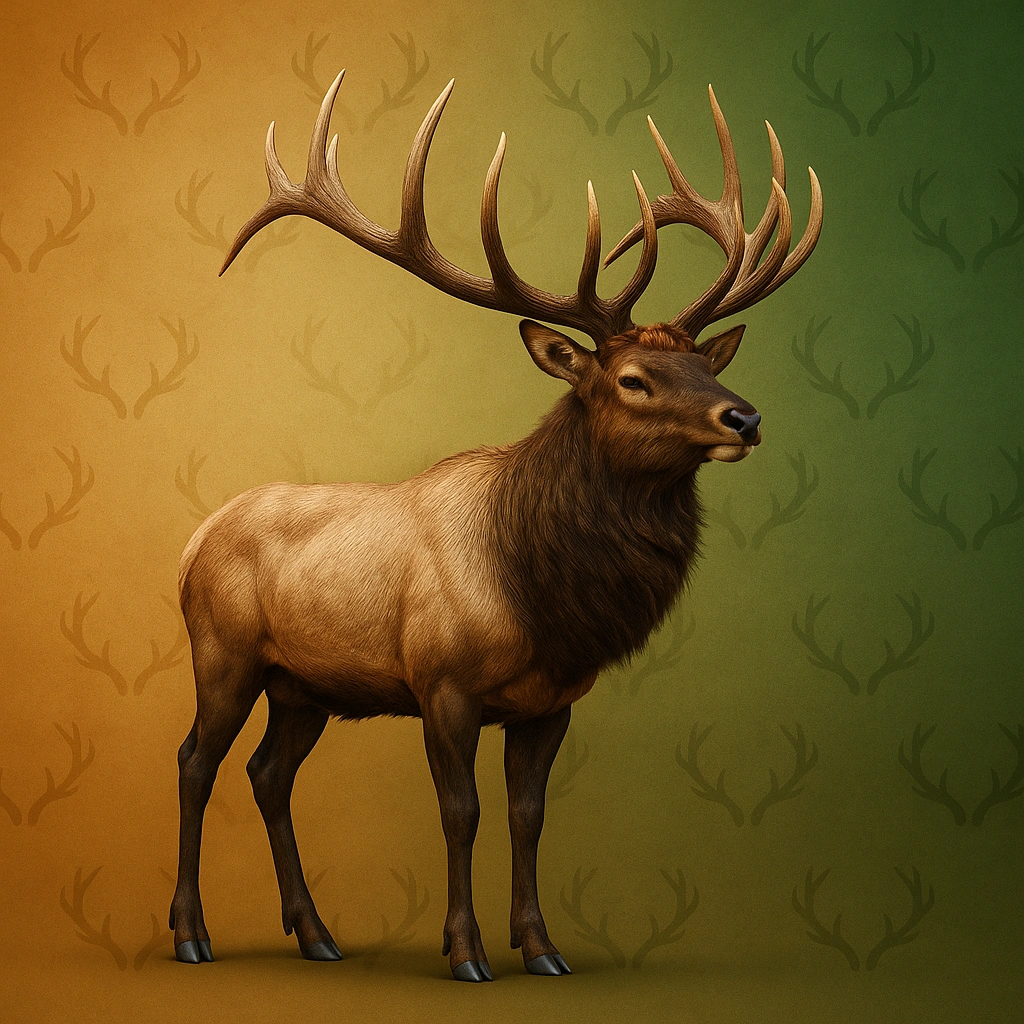
Elk are among the largest members of the deer family. Adult bulls typically weigh between 600 and 1,000 pounds (270–450 kg), while cows are smaller, averaging 400–600 pounds (180–270 kg). Their coats shift seasonally, from reddish-brown in summer to a darker, thicker brown in winter, often with a distinct pale rump patch. The most distinctive feature of bulls is their antlers, which can span up to four feet across and weigh over 40 pounds. Each year, bulls shed and regrow their antlers, with size and branching influenced by age, health, and nutrition.
Behavior
Elk are highly social animals, often forming herds led by cows and calves, while bulls remain more solitary outside of the breeding season. They are primarily grazers, feeding on grasses, forbs, and shrubs, though in winter they may browse woody vegetation. Elk are crepuscular, most active during dawn and dusk. During the fall rut, bulls engage in dramatic displays of bugling, sparring, and herding females. Natural predators include wolves, mountain lions, bears, and coyotes, though humans are the primary factor shaping elk populations through hunting and land use.
Habitat
Elk thrive in diverse habitats, ranging from alpine meadows and mountain valleys to grasslands and forests. In North America, they are most abundant in the Rocky Mountain region, but also inhabit parts of the Pacific Northwest, Great Plains, and reintroduction areas in the Midwest and East. Seasonal movements are common, with elk migrating between higher elevations in summer and lower valleys in winter, following food availability and avoiding deep snow.
Hunting and Seasonality
Hunting Practices
Elk hunting is considered one of the most challenging pursuits in North American big game hunting. Legal hunting methods vary by state and province, but generally include rifle, muzzleloader, and archery seasons. Spot-and-stalk hunting, calling during the rut, and glassing from ridgelines are common strategies. Ethical hunting emphasizes fair chase, respect for the animal, and compliance with regulations such as tag limits and draw systems. Due to their keen senses and rugged habitats, elk hunting requires physical endurance and careful preparation.
Seasonal Activity
Elk behavior changes dramatically with the seasons. In spring, herds migrate to higher elevations to feed on new vegetation. Summer is a time of growth, with calves being born and bulls developing antlers. Fall marks the rut, when bulls compete for harems of cows through bugling and sparring. Winter forces elk to lower elevations, where they conserve energy in larger herds, relying on stored fat and available forage. These seasonal shifts shape both viewing opportunities and hunting strategies across the year.
Ecological Role
Elk play a vital role in their ecosystems. As large grazers, they influence plant communities, prevent overgrowth of grasses, and create openings for other species. Their movements contribute to seed dispersal, while their carcasses provide food for scavengers and predators. Elk populations also support predator species like wolves and mountain lions, helping maintain ecological balance. In areas of high density, however, elk can overbrowse vegetation, requiring careful management to prevent habitat degradation.
Conservation and Management
Historically, elk populations declined sharply due to unregulated hunting and habitat loss in the 19th century. Today, thanks to conservation efforts, regulated hunting, and reintroduction programs, elk populations are stable or growing across much of their range. Organizations such as the Rocky Mountain Elk Foundation have played a crucial role in habitat conservation and public awareness. Management strategies include controlled hunting seasons, habitat restoration, and monitoring of population health to ensure sustainable numbers for future generations.
Monthly Guides
Explore detailed monthly guides to learn how elk behavior and hunting strategies change throughout the year. Each month provides unique insights into elk movement, feeding, and opportunities for hunters and wildlife watchers.
Quick Reference Table
| Aspect | Details |
|---|---|
| Scientific Name | Cervus canadensis |
| Category | Big Game |
| Typical Weight | 400–1,000 lbs (180–450 kg) |
| Habitat | Forests, meadows, grasslands, alpine valleys |
| Range | Rocky Mountains, Pacific Northwest, Great Plains, Midwest, Eastern reintroduction areas |
| Season | Fall hunting seasons; peak activity during the rut (September–October) |
| Conservation Status | Stable, increasing in many areas |
Elk (Wapiti) Hunting Information
For a full archive of hunting posts by month, visit the
Elk (Wapiti) Category.