
Introduction
The Dusky Grouse (Dendragapus obscurus) is one of North America’s most iconic upland game birds, inhabiting the mountainous forests and open meadows of the western United States and Canada. Known for its cryptic plumage and elusive behavior, this species represents a rewarding challenge for hunters and an exciting find for birders and wildlife enthusiasts alike.
As one of the largest grouse species in North America, the Dusky Grouse plays a vital role in the ecosystem and holds deep cultural significance for outdoor recreationists. Its seasonal movements, unique courtship displays, and striking appearance make it a key species for those studying or enjoying wildlife in alpine and subalpine habitats.
Hunters, naturalists, and photographers value the Dusky Grouse not only for its sporting qualities but also for its contribution to the biodiversity of North America’s high-elevation forests. Understanding its life cycle and habits helps support sustainable management and conservation practices.
Identification and Characteristics
Appearance
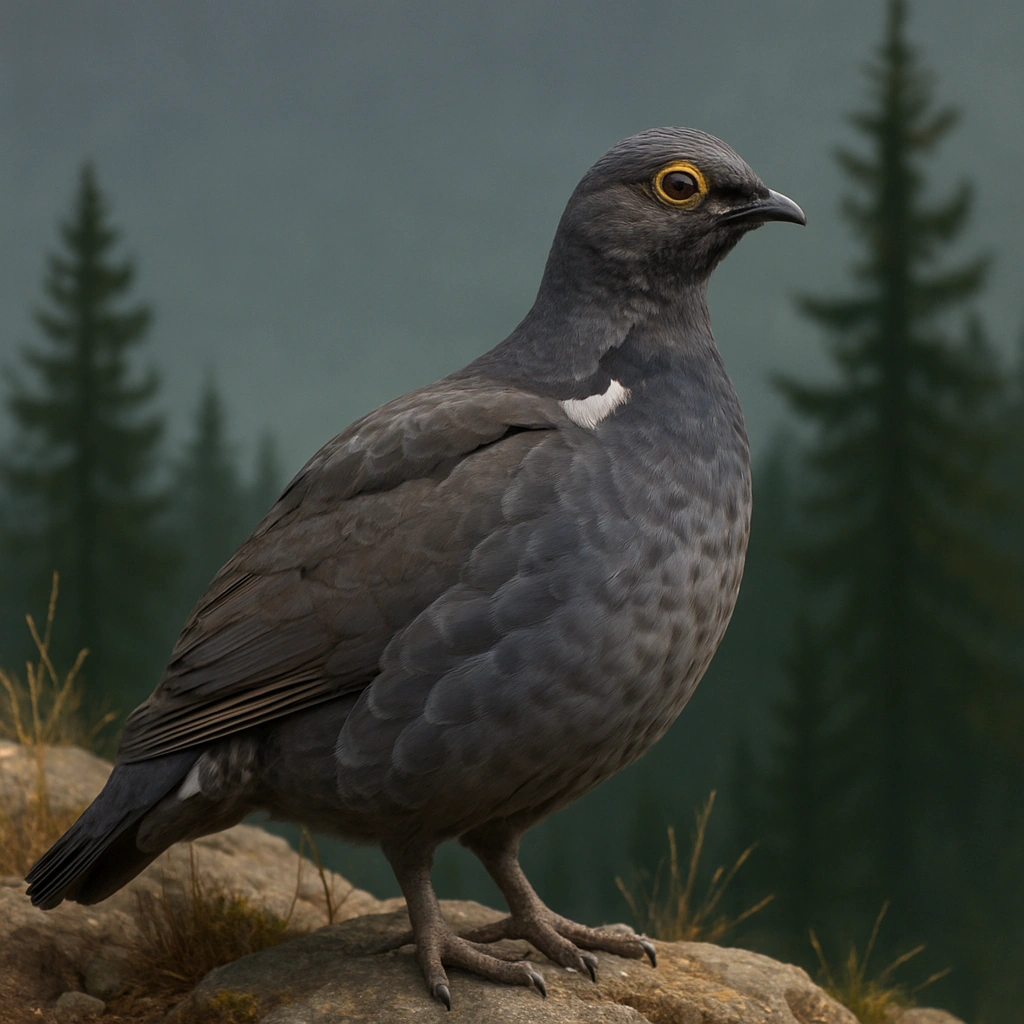
The Dusky Grouse is a large, heavy-bodied bird ranging from 1.5 to 3 pounds (0.7–1.4 kg) with a length of about 15–20 inches (38–50 cm). Its plumage is primarily grayish-brown with mottled markings that blend seamlessly into coniferous forest floors. Males display a slate-gray body with lighter underparts and striking yellow to orange eye combs during courtship, while females are more heavily barred and cryptically colored for camouflage during nesting.
Distinctive features include the fan-shaped tail with a broad gray band near the tip and feathered legs adapted to cold environments. In flight, the Dusky Grouse shows strong wingbeats followed by glides, making it recognizable even at a distance.
Behavior
Primarily ground-dwelling, the Dusky Grouse spends much of its time foraging on buds, leaves, berries, and insects. During spring and summer, these birds form loose flocks, but males become territorial during the breeding season, performing booming displays to attract females. They are mostly sedentary but exhibit seasonal altitudinal migrations, moving from higher elevations in summer to lower elevations in winter.
Predators include raptors such as hawks and owls, as well as mammals like foxes and martens. The species’ cryptic coloration and strong flight help it evade predation.
Habitat
Dusky Grouse favor coniferous and mixed-forest habitats, particularly along forest edges, alpine meadows, and clearings. They are widely distributed across the Rocky Mountains, Sierra Nevada, Cascades, and other western ranges from Alaska to New Mexico. In summer, they occupy higher-elevation areas with abundant vegetation, descending to denser conifer forests at lower elevations during winter.
Hunting and Seasonality
Hunting Practices
The Dusky Grouse is a prized upland game bird, hunted under state-regulated seasons across much of its range. Common hunting methods include walk-up hunting with or without pointing dogs, as well as still-hunting along ridges and forest edges where birds feed in the morning and evening. Ethical hunters practice selective harvest and ensure compliance with bag limits and licensing requirements.
Seasonal Activity
Behavior varies across the seasons. In spring, males display on open ridges to attract mates. In summer, broods feed on insects and green vegetation. By early autumn, birds become more dispersed and harder to locate as they shift to berry-rich habitats. Winter brings a move to dense conifer stands, where they feed primarily on needles. Understanding these seasonal shifts is key to successful and ethical hunting.
Ecological Role
The Dusky Grouse contributes significantly to ecosystem health. By feeding on berries and seeds, it aids in seed dispersal and vegetation regeneration. As a prey species, it supports a variety of predators, forming a vital link in the food web. Its habitat preferences also serve as indicators of healthy high-elevation forest ecosystems.
Conservation and Management
Currently, the Dusky Grouse population is considered stable across most of its range, although localized declines can occur due to habitat loss, severe winters, or overharvest. Wildlife agencies monitor populations and adjust hunting regulations accordingly to maintain sustainable numbers. Conservation efforts focus on preserving diverse forest structures and protecting key breeding and wintering habitats.
Monthly Guides
Below you can explore monthly guides detailing the behavior, habitat use, and hunting tips for Dusky Grouse throughout the year. Each month highlights key changes in movement, diet, and hunting opportunities to help you plan your outdoor activities responsibly.
Quick Reference Table
| Aspect | Details |
|---|---|
| Scientific Name | Dendragapus obscurus |
| Category | Upland Game Birds |
| Typical Weight | 1.5–3 lbs (0.7–1.4 kg) |
| Habitat | Coniferous forests, alpine meadows, mixed-wood edges |
| Range | Rocky Mountains, Sierra Nevada, Cascades, western U.S. and Canada |
| Season | Best hunting in early fall (September–October) under state regulations |
| Conservation Status | Stable |
Dusky Grouse Hunting Information
For a full archive of hunting posts by month, visit the Dusky Grouse Category.