
Introduction
The Dall Sheep (Ovis dalli dalli) is one of North America’s most iconic alpine species, instantly recognizable by its brilliant white coat and impressive curling horns. Native to the rugged mountain ranges of Alaska and northwestern Canada, this wild sheep embodies the harsh beauty of the Arctic and subarctic wilderness. Their ability to survive in extreme conditions and navigate sheer cliffs makes them a symbol of resilience and adaptability.
For hunters, the Dall sheep is considered one of the most prestigious trophies in North America’s big game hunting world. Pursuing these animals often requires challenging climbs into remote alpine terrain, testing a hunter’s endurance and skill. Wildlife enthusiasts and naturalists, meanwhile, are drawn to their dramatic landscapes, fascinating social behaviors, and seasonal migrations across some of the continent’s most pristine habitats.
From their ecological importance as grazers in high-elevation ecosystems to their cultural and recreational significance, the Dall sheep continues to captivate all who encounter them. Studying and conserving this species provides insight into both mountain ecosystems and the human relationship with wilderness.
Identification and Characteristics
Appearance
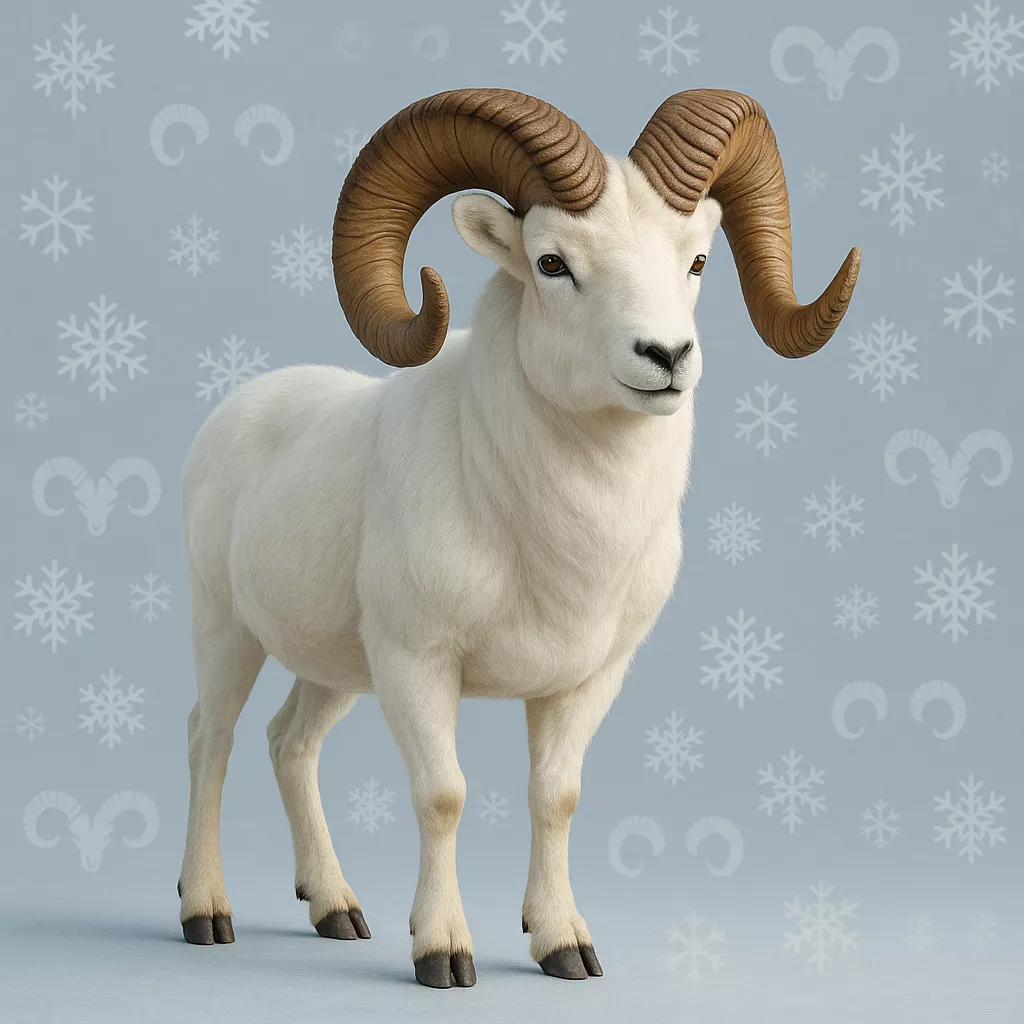
Dall sheep are medium-sized wild sheep, with adult males (rams) weighing between 160 and 250 lbs (72–113 kg) and standing about 3 feet (90 cm) at the shoulder. Ewes are smaller, averaging 100 to 150 lbs (45–68 kg). The most striking feature of the rams is their massive, curling horns, which can grow to over 40 inches (102 cm) in length and form a full spiral with age. Ewes also have horns, though they are shorter, thinner, and less curved.
Their coat is pure white, providing camouflage against snow and scree-covered mountain slopes. This sets them apart from Stone sheep (Ovis dalli stonei), their darker-colored subspecies relatives. Their muscular build, strong legs, and specialized hooves give them extraordinary agility in climbing cliffs and steep ridges.
Behavior
Dall sheep live in social groups, with rams and ewes typically forming separate bands outside the breeding season. Ewes and lambs remain in nursery groups, while rams gather in bachelor herds. During the rut in late fall, males engage in dramatic horn-clashing battles to establish dominance, with the loud crashes echoing through mountain valleys.
They are primarily grazers, feeding on grasses, sedges, lichens, and low shrubs. In winter, they seek windswept ridges and south-facing slopes where vegetation is more accessible. Predators include wolves, bears, and golden eagles (which sometimes prey on lambs), though their cliffside habitat offers natural protection.
Habitat
Dall sheep inhabit alpine and subalpine environments, favoring steep, rocky mountainsides and open ridges above the treeline. These habitats provide both feeding opportunities and escape terrain from predators. Their range is concentrated in Alaska’s mountain systems, including the Brooks Range, Alaska Range, and Wrangell-St. Elias, as well as the Yukon, Northwest Territories, and northern British Columbia in Canada.
Seasonal movements are common, with sheep shifting between summer grazing areas in high alpine meadows and lower winter ranges with accessible forage. Migration patterns vary depending on snow depth, forage availability, and herd location.
Hunting and Seasonality
Hunting Practices
Dall sheep hunting is one of the most challenging and rewarding pursuits in North America. Hunting opportunities are carefully regulated, with permits issued through lotteries or limited draws to ensure sustainable harvests. Most hunts take place in Alaska and Canada, where guides are often required for nonresident hunters.
The primary hunting method is spot-and-stalk, with hunters glassing mountain ridges from a distance before making demanding ascents to intercept rams. Bowhunting and rifle hunting are both practiced. Ethical hunting emphasizes taking only full-curl or mature rams, leaving younger males and ewes to sustain populations.
Seasonal Activity
The rut occurs from late November into early December, when rams compete for breeding access to ewes. This is a period of heightened visibility and activity, as rams engage in head-to-head clashes. Lambing occurs in late May or June, with ewes retreating to isolated cliffs to give birth to one lamb, which joins the nursery groups within days.
In summer, Dall sheep graze on alpine meadows, while in winter they move to windswept ridges where snow cover is thinner. Hunting seasons typically occur in late summer and early fall, when sheep are more accessible and weather conditions permit extended hunts.
Ecological Role
Dall sheep play a crucial role in alpine ecosystems as grazers. By feeding on grasses, sedges, and lichens, they influence vegetation dynamics and nutrient cycling. Their grazing helps maintain open alpine meadows, which benefits other herbivores and plant species.
They also serve as prey for wolves, bears, and golden eagles, linking higher trophic levels in mountain ecosystems. The presence of healthy Dall sheep populations indicates robust alpine habitats, making them valuable indicators of ecosystem health.
Conservation and Management
Dall sheep populations are generally considered stable, with an estimated 70,000–75,000 individuals across Alaska and northwestern Canada. However, localized declines have occurred due to harsh winters, predation, habitat encroachment, and disease transmission from domestic sheep and goats.
Wildlife agencies manage populations through controlled hunting regulations, habitat protection, and monitoring of herd health. Conservation efforts focus on preventing disease spread, maintaining migration corridors, and balancing recreational hunting with long-term sustainability. Collaborative efforts with Indigenous communities also play a role in management strategies.
Monthly Guides
Learn how Dall sheep behave and adapt throughout the year with monthly guides. From lambing season in spring to the high-energy rut in late fall and the challenges of winter survival, each month provides unique insights into the life cycle and hunting opportunities of this alpine species.
Quick Reference Table
| Aspect | Details |
|---|---|
| Scientific Name | Ovis dalli dalli |
| Category | Big Game |
| Typical Weight | 100–250 lbs (45–113 kg) |
| Habitat | Alpine and subalpine mountains, rocky ridges, tundra slopes |
| Range | Alaska, Yukon, Northwest Territories, Northern British Columbia |
| Season | Late summer to early fall hunting seasons |
| Conservation Status | Generally Stable, regionally vulnerable |
Dall Sheep Hunting Information
For a full archive of hunting posts by month, visit the
Dall Sheep Category.