
American Bison: North American Wildlife and Hunting Guide
A complete resource for hunters, naturalists, and wildlife enthusiasts interested in one of North America’s most iconic species.
Introduction
The American Bison (Bison bison) is one of the most iconic symbols of North America, representing strength, resilience, and the continent’s rich natural heritage. Once numbering in the tens of millions, bison roamed the grasslands of the Great Plains and surrounding regions, playing a crucial role in shaping ecosystems and supporting Indigenous cultures.
Today, bison are a species of interest not only to wildlife enthusiasts and naturalists but also to hunters who seek a challenging and rewarding experience. Their large size, impressive endurance, and historical significance make them a prized target for regulated hunting in certain regions.
Beyond hunting, observing bison provides insights into the social structures and behaviors of large grazing mammals. Their presence in North American landscapes remains vital for both ecological balance and cultural appreciation.
Identification and Characteristics
Appearance
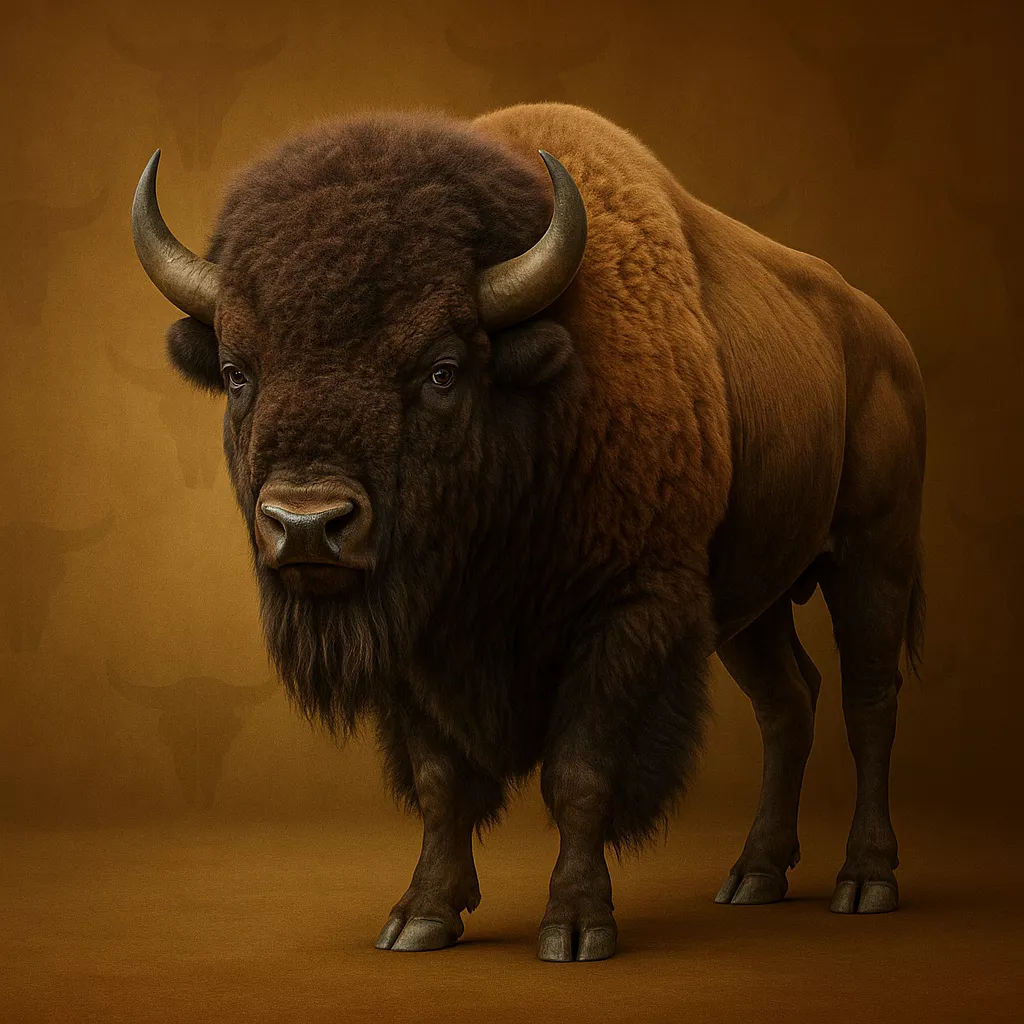
American Bison are massive herbivores, easily recognizable by their imposing size, humped shoulders, and shaggy fur. Adult males can weigh between 1,000–2,200 lbs (450–1,000 kg), while females are typically smaller, ranging from 800–1,200 lbs (360–540 kg). Bison stand 5–6.5 feet tall at the shoulder and reach lengths of up to 12 feet (3.7 meters) including their head and tail.
The bison’s dark brown coat thickens during winter months to provide insulation, with long hair covering the head, neck, and forequarters. Unlike antlered ungulates, bison have short, curved horns that both males and females use for defense and dominance displays. Their massive heads and muscular necks contribute to their distinctive, humped appearance.
Behavior
Bison are social animals that travel in herds, with adult females and calves forming the core of the group, while males often form bachelor groups or join female herds during the breeding season. They are primarily grazers, feeding on grasses, sedges, and forbs. Bison can travel long distances in search of food and water, using well-trodden paths across grasslands.
Despite their size, bison are agile and capable of running up to 35 mph (56 km/h). They defend themselves against predators such as wolves and cougars with their size, strength, and herd coordination. Their behavior also includes seasonal movements, wallowing in dust or mud, and head-butting during dominance contests.
Habitat
American Bison inhabit open grasslands, prairies, and river valleys. Historically, their range extended from the Great Plains across much of central North America, including parts of the Midwest and western Canada. Today, wild populations are primarily confined to protected reserves, national parks, and private ranches, though reintroduction efforts have expanded their distribution.
Seasonal movements may occur depending on forage availability and weather conditions. In winter, bison may shift to lower elevations or sheltered areas to conserve energy, while spring and summer bring grazing on new growth and calving in favorable habitats.
Hunting and Seasonality
Hunting Practices
Bison hunting is strictly regulated and typically conducted under controlled permits in specific states, including Montana, South Dakota, and Wyoming. Legal methods include rifles and bows, and hunters are required to follow ethical practices such as fair chase, proper tagging, and adherence to local regulations.
Successful hunting often involves scouting herd movements, understanding feeding patterns, and selecting a safe and responsible location. Ethical hunters prioritize respect for the animal, aiming for a clean, humane kill and utilizing as much of the harvested bison as possible.
Seasonal Activity
The bison breeding season, or rut, occurs from July to September. During this period, males compete for access to females, which can influence herd movement and behavior. Hunting season is typically scheduled in late summer or early fall to coincide with optimal bison activity while minimizing impact on calving periods.
Winter can be challenging for bison due to deep snow and low temperatures, but in protected herds, hunting is restricted or prohibited to allow survival. Spring is primarily calving season, making it a sensitive period for population management and conservation.
Ecological Role
American Bison play a critical role in their ecosystems. As grazers, they maintain grassland health, prevent overgrowth, and stimulate plant diversity. Their wallows create microhabitats that benefit insects, amphibians, and other small wildlife. Bison also facilitate seed dispersal, promote nutrient cycling through their waste, and serve as prey for large predators in natural settings.
Their presence helps maintain balanced predator-prey dynamics and contributes to the overall biodiversity of North American grasslands.
Conservation and Management
Once nearly extinct due to overhunting and habitat loss, bison populations have rebounded thanks to conservation efforts, private ranching, and public management programs. Current populations are stable in several protected areas and on managed ranches, though wild herds remain limited and fragmented.
Wildlife agencies monitor herd health, genetic diversity, and population density, while public education campaigns promote coexistence with other land uses. Continued efforts are essential to maintain the ecological and cultural value of bison across North America.
Monthly Guides
Below are links to monthly posts detailing how American Bison behave, move, and are hunted throughout the year. Each guide provides seasonal insights and tips for wildlife observation and hunting.
Quick Reference Table
| Aspect | Details |
|---|---|
| Scientific Name | Bison bison |
| Category | Big Game |
| Typical Weight | Males: 1,000–2,200 lbs (450–1,000 kg), Females: 800–1,200 lbs (360–540 kg) |
| Habitat | Grasslands, prairies, river valleys |
| Range | Montana, South Dakota, Wyoming, North Dakota, Colorado, Alberta, Saskatchewan |
| Season | Late Summer to Early Fall |
| Conservation Status | Stable (managed populations) |
Hunting Information
For a full archive of hunting posts by month, visit the
American Bison Category.